
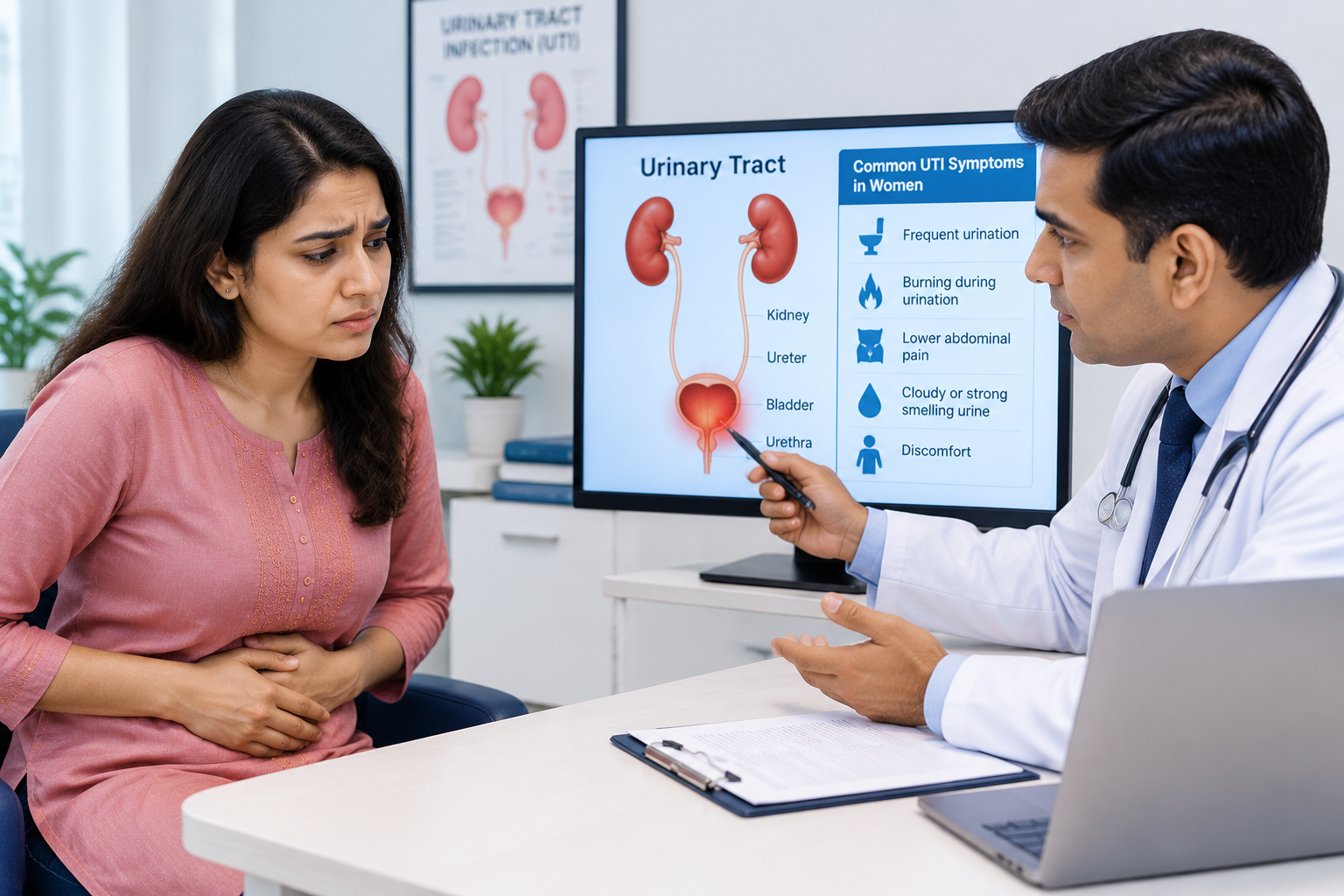
Urinary symptoms in women are common, but they are often dismissed as "just a UTI" or something to simply live with. In reality, urinary problems in women can stem from several different causes — infections, bladder conditions, pelvic floor changes, hormonal shifts, stones, or other urinary tract issues — and similar symptoms can point to quite different underlying conditions. Understanding this distinction is the first step toward appropriate evaluation rather than repeated, unguided treatment.
Women exploring Female Urology Treatment in JP Nagar often want to understand what their symptoms could mean and when it's time to see a specialist. Dr. Uday Bhaskar , Urologist & Andrologist, sees patients across JP Nagar and Bangalore for evaluation of urinary tract concerns. This article is intended for general education; it does not state that any specific test or procedure described here is performed by Dr. Uday Bhaskar , and patients should confirm this directly during consultation.
What Is Female Urology?
Female urology is the branch of medicine concerned with conditions affecting the bladder, urethra, kidneys, ureters, and the broader lower urinary tract in women, including urinary symptoms related to pelvic floor function. Because these structures are closely connected to reproductive anatomy, female urology often overlaps with gynecology, urogynecology, and general medicine, depending on the specific condition involved.
Women seeking a female urology specialist in JP Nagar are typically looking for evaluation of symptoms such as infections, leakage, urgency, or difficulty urinating — concerns that benefit from a focused urological assessment rather than assumption alone.
Common Urinary Problems in Women
Urinary Tract Infections (UTIs)
A UTI occurs when bacteria infect part of the urinary tract, commonly the bladder. Typical symptoms include burning during urination, frequent urination, urgency, lower abdominal discomfort, and sometimes cloudy or strong-smelling urine. Fever, flank pain, vomiting, or feeling significantly unwell alongside urinary symptoms may indicate a more serious kidney infection requiring prompt medical assessment.
Recurrent UTIs in Women
Recurrent UTI in women generally refers to repeated infections over a defined period, and it often warrants further evaluation rather than repeated courses of antibiotics alone. Contributing factors can vary between individuals and may include sexual activity, menopausal changes, incomplete bladder emptying, underlying urinary tract abnormalities, kidney or bladder stones, certain medical conditions, or previous urinary procedures. Repeated antibiotic use should ideally be guided by clinical evaluation and, where indicated, urine culture testing to confirm infection and identify the responsible organism.
Urinary Incontinence
Urinary incontinence refers to involuntary leakage of urine and can take different forms. Stress urinary incontinence involves leakage with coughing, sneezing, or physical exertion. Urgency urinary incontinence involves a sudden, strong urge followed by leakage. Some women experience mixed incontinence, combining both patterns, while overflow or other less common types also occur. Contributing factors may include pregnancy and childbirth, pelvic floor weakness, menopause, obesity, neurological conditions, or bladder dysfunction.
Overactive Bladder
Overactive bladder is characterised by urgency, frequent urination, nocturia (waking at night to urinate), and sometimes urgency-related leakage. While symptoms can overlap with a urinary infection, overactive bladder is a distinct condition related to bladder muscle behaviour rather than infection.
Difficulty Emptying the Bladder
Some women experience a weak urine stream, straining, a sensation of incomplete emptying, frequent bathroom trips, or urinary retention. Persistent difficulty emptying the bladder should be medically evaluated, as it can stem from several different underlying causes.
Blood in Urine
Visible or microscopic blood in urine can result from a UTI, urinary stones, kidney disease, trauma, certain medications, or, less commonly, urinary tract cancers. Unexplained blood in urine should never simply be ignored, regardless of whether other symptoms are present.
Kidney and Bladder Stones
Stones in the kidney or bladder can cause flank pain, lower abdominal pain, blood in urine, nausea, vomiting, or other urinary symptoms. Treatment approaches depend on stone size, location, associated symptoms, presence of obstruction or infection, and other individual clinical factors.
Why Do Women Develop Urinary Problems?
Several factors can contribute to female urinary problems , including anatomical differences, pregnancy, childbirth, menopause and related hormonal changes, pelvic floor dysfunction, infections, kidney or bladder stones, neurological conditions, certain medications, previous pelvic or urinary procedures, and age-related changes. While some of these factors become more common with age, urinary symptoms should not be accepted as an unavoidable or untreatable part of getting older — many causes are identifiable and manageable once properly evaluated.
When Should a Woman See a Urologist?
Specialist evaluation may be appropriate for recurrent UTIs, persistent urinary symptoms, blood in urine, urinary incontinence affecting daily life, difficulty emptying the bladder, recurrent kidney or bladder stones, persistent pelvic or urinary discomfort, urinary retention, or symptoms that don't improve as expected with initial treatment.
Women searching for a Female Urologist in JP Nagar Bangalore or a Female Urologist in Bangalore are often looking for this kind of focused evaluation. These are common patient search terms rather than claims about any specific doctor being objectively superior — the right specialist for you is one who evaluates your symptoms thoroughly and explains findings clearly.
Warning Signs That Need Prompt Medical Attention
Certain symptoms should not be ignored and may need urgent assessment: inability to pass urine, high fever with urinary symptoms, severe flank or abdominal pain, blood in urine, blood clots in urine, vomiting with severe urinary pain, significant weakness or dizziness associated with heavy bleeding, or a sudden, severe worsening of urinary symptoms. The urgency of any given symptom depends on the overall clinical picture, so it's best assessed by a doctor rather than self-judged.
How Are Female Urinary Problems Diagnosed?
Medical History
The doctor typically asks about urinary frequency, urgency, leakage patterns, pain, previous UTIs, menstrual or menopausal status where relevant, pregnancy and childbirth history, prior surgeries, current medications, fluid intake, and any previous urinary conditions.
Physical Examination
A physical examination is performed when clinically appropriate to assess relevant findings.
Urine Tests
Urinalysis, urine microscopy, and urine culture help detect infection and other abnormalities. Urine culture is particularly useful in cases of suspected or recurrent infection, as it identifies the specific bacteria involved and guides appropriate treatment.
Blood Tests
Blood tests assessing kidney function or other relevant markers may be recommended depending on the clinical situation.
Ultrasound
Ultrasound imaging can help assess the urinary tract, evaluate bladder emptying, and detect stones or structural abnormalities.
Other Tests
Depending on symptoms, additional tests may be considered, including post-void residual urine measurement, uroflowmetry, cystoscopy, CT imaging, or urodynamic testing. Not every patient requires every test — the specific work-up depends on individual symptoms and findings.
Female Urology Treatment Options
Treatment depends entirely on the underlying diagnosis, and no single approach applies universally.
UTI Treatment: Bacterial UTIs may require antibiotics, prescribed according to the clinical situation and, where appropriate, guided by urine testing.
Recurrent UTI Management: This often involves individualised prevention strategies alongside investigation of contributing causes, rather than repeated antibiotic courses alone.
Urinary Incontinence: Approaches may include pelvic floor muscle training, bladder training, lifestyle modifications, medications in selected patients, or procedures/surgery in selected cases.
Overactive Bladder: Management may involve behavioural strategies, bladder training, pelvic floor therapy, medications when appropriate, or other specialist treatments for select patients.
Stones: Treatment ranges from observation and medical management to procedural intervention, depending on stone characteristics and symptoms.
Urinary Retention: Treatment depends on the underlying cause and may sometimes require urgent bladder drainage.
The specific treatment plan for any individual patient can only be determined after proper diagnosis.
Role of a Female Urology Specialist in JP Nagar
A female urology specialist in JP Nagar can evaluate persistent or recurrent urinary symptoms through appropriate history-taking, examination, and testing, helping determine whether further investigation or treatment is warranted. This evaluation is particularly valuable when symptoms have not responded to initial treatment or keep recurring, since repeated unguided treatment without identifying the underlying cause is rarely an effective long-term solution. Women seeking a Female Urologist in JP Nagar Bangalore benefit from this structured, evidence-based approach to diagnosis.
Female Urology and Quality of Life
Urinary problems can meaningfully affect daily life — disrupting sleep, work, exercise, travel, social activities, and personal confidence. Many women adjust their routines around these symptoms rather than seeking evaluation, but persistent urinary issues often have an identifiable and manageable underlying cause. Addressing symptoms early can meaningfully improve day-to-day comfort and confidence.
Female Urology Treatment in JP Nagar
Women in JP Nagar and surrounding Bangalore neighbourhoods, including Jayanagar, Banashankari, and BTM Layout, may seek specialist evaluation for persistent or recurrent urinary symptoms. Female Urology Treatment in JP Nagar generally begins with a thorough evaluation of symptoms and relevant history, followed by targeted testing to identify the underlying cause. This article does not state specific clinic locations, facilities, appointment availability, or hospital affiliations, and these should be confirmed directly.
Why Specialist Evaluation Can Matter
Urinary symptoms frequently overlap between different conditions. Burning urination may occur with a UTI but can also have other causes. Urgency may result from infection or from overactive bladder. Blood in urine may occur with infection, stones, or other urinary tract conditions. Leakage can take different forms with different underlying mechanisms. Because of this overlap, identifying the actual underlying cause — rather than repeatedly treating symptoms in isolation — is central to effective, lasting management.
Conclusion
Urinary problems in women are common and can arise from a wide range of causes, from infections and stones to incontinence, overactive bladder, and pelvic floor changes. Because symptoms often overlap between conditions, proper evaluation — including history, examination, and targeted testing — is key to identifying the right cause and appropriate treatment. Women in JP Nagar and Bangalore experiencing persistent, recurrent, or unexplained urinary symptoms are encouraged to seek evaluation from a qualified urology specialist rather than assuming or self-treating.
Medical Disclaimer
The information provided in this article is for general educational purposes only and does not replace consultation, diagnosis, or treatment from a qualified healthcare professional. Urinary symptoms in women can have several different causes, and appropriate evaluation and treatment should be determined individually by a qualified urologist.