
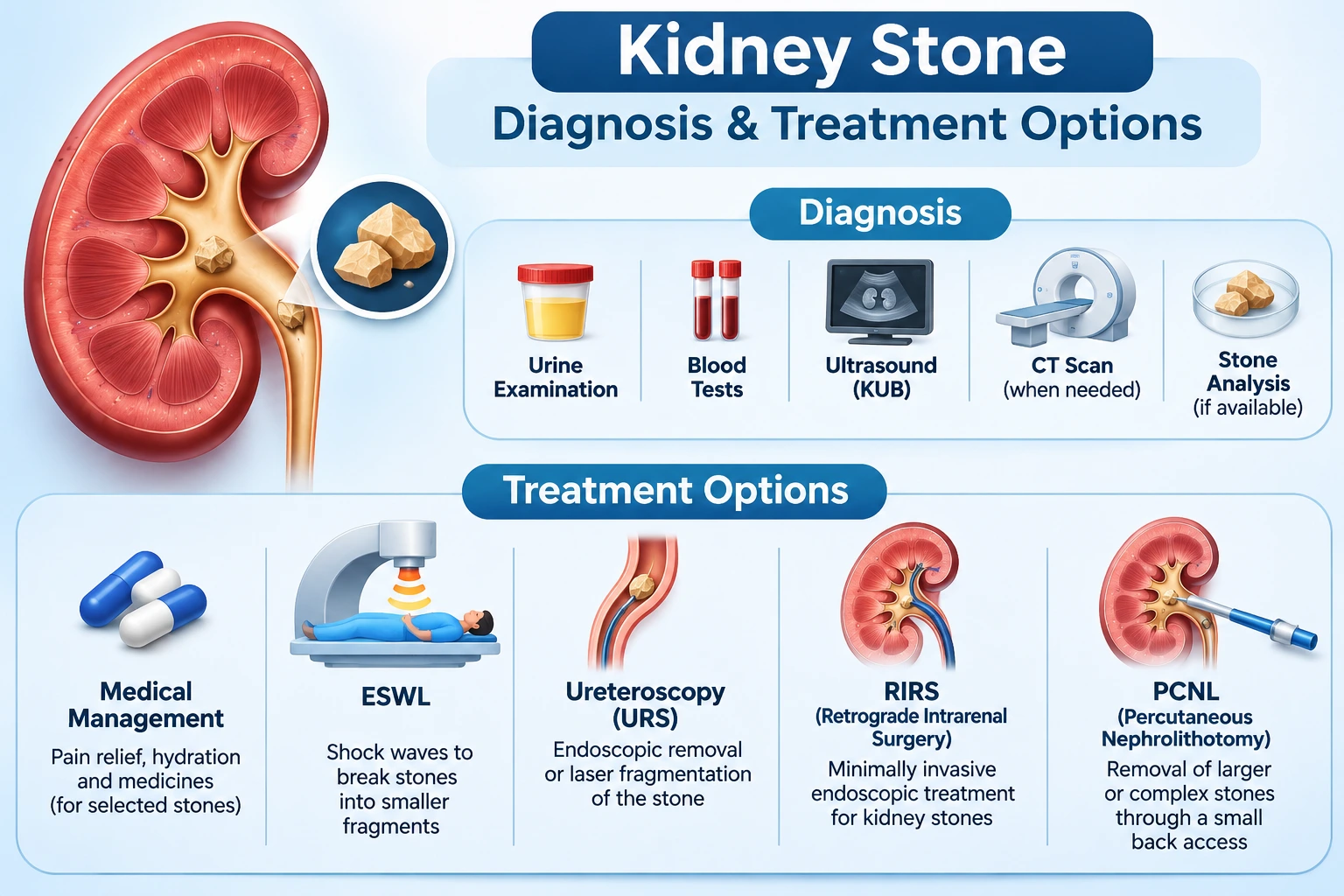
Kidney stones are a common urinary system condition that can cause severe pain, urinary discomfort and other complications. They develop when minerals and salts present in urine form hard deposits inside the kidneys. The size, number, location and composition of these stones influence the symptoms and treatment approach.
People searching for Kidney Stone Treatment in Hennur often want to understand how kidney stones are diagnosed, whether surgery is necessary and which treatment options are available. Consulting a qualified urologist can help identify the stone characteristics and determine an appropriate management plan.
Dr. Uday Bhaskar, a Urologist and Andrologist in Bangalore with over 20 years of experience, manages various urological conditions, including kidney and urinary stone disorders. Patients from Hennur and surrounding areas can enquire about consultation availability and suitable treatment options.
What Are Kidney Stones?
Kidney stones are solid deposits formed when certain minerals and salts in urine become concentrated and crystallise. They may remain inside the kidney or move into the ureter, the tube connecting the kidney to the urinary bladder.
Small stones may pass through the urinary tract without requiring a surgical procedure. Larger stones or stones causing obstruction may require medical intervention.
People looking for a Kidney Specialist in Hennur should understand that not every kidney stone requires the same treatment. The doctor considers the stone's size, location, density and associated symptoms before recommending care.
Common Symptoms of Kidney Stones
Kidney stone symptoms can vary depending on the location and size of the stone. Some people may not experience symptoms initially, while others may develop sudden and severe pain.
Common warning signs include:
1. Severe Side or Back Pain
Pain associated with kidney stones may occur below the ribs, on one side of the back or around the flank. It may move towards the lower abdomen or groin.
2. Blood in Urine
A stone moving through the urinary tract may irritate its lining and cause blood to appear in the urine. Sometimes the blood is visible, while in other cases it can only be detected through laboratory testing.
3. Frequent Urination
Stones located closer to the bladder may cause frequent urination, urgency or discomfort while passing urine.
4. Burning Sensation During Urination
A burning sensation can occur due to urinary tract irritation or an associated infection. Medical assessment helps determine the actual cause.
5. Nausea and Vomiting
Severe kidney stone pain may be accompanied by nausea and vomiting.
6. Fever and Chills
Fever or chills associated with urinary obstruction may indicate an infection. An infected obstructed urinary system is a medical emergency and requires immediate medical attention.
What Causes Kidney Stones?
Kidney stones can develop due to several factors affecting urine composition and concentration.
Common risk factors include:
- Inadequate fluid intake
- High concentration of calcium, oxalate or uric acid in urine
- Family history of kidney stones
- Certain metabolic conditions
- Recurrent urinary tract infections
- High salt intake
- Excessive consumption of certain stone-forming foods
- Obesity and associated metabolic factors
- Certain medications and supplements
A person with a history of kidney stones may have a higher chance of developing them again. Understanding the underlying risk factors can help guide prevention.
Types of Kidney Stones
Identifying the type of kidney stone can help doctors understand why it developed and recommend suitable preventive measures.
Calcium Oxalate Stones
These are among the commonly identified kidney stones. They form when calcium combines with oxalate in urine.
Uric Acid Stones
Uric acid stones may develop when urine is persistently acidic or when uric acid levels are elevated.
Struvite Stones
These stones are associated with certain urinary tract infections. They may grow relatively quickly and require appropriate medical evaluation.
Cystine Stones
Cystine stones are uncommon and are associated with an inherited condition called cystinuria.
Stone analysis, when available, can help identify its composition.
How Are Kidney Stones Diagnosed?
A Kidney Specialist in Hennur or another qualified urologist may recommend investigations based on symptoms and medical history.
Common diagnostic procedures include:
1. Urine Examination: Helps identify blood, infection and certain chemical abnormalities.
2. Blood Tests: May assess kidney function, calcium levels, uric acid and other relevant parameters.
3. Ultrasound: Helps identify kidney stones, urinary obstruction and changes in the urinary tract.
4. CT Scan: A non-contrast CT scan may be recommended to assess the size, location and density of stones.
5. Stone Analysis: If a stone is passed or removed, laboratory analysis may help determine its composition.
Not every patient needs every investigation. The doctor selects the appropriate tests according to the clinical situation.
Kidney Stone Treatment Options in Hennur
The treatment approach depends on the stone's characteristics, symptoms, kidney function and presence of infection or obstruction.
1. Medical Management
Small stones may sometimes pass naturally. The doctor may recommend pain management, adequate fluid intake where appropriate and selected medicines to support stone passage.
Patients should not attempt to manage severe pain or suspected obstruction without medical assessment.
2. Extracorporeal Shock Wave Lithotripsy (ESWL)
ESWL uses shock waves generated outside the body to break certain kidney stones into smaller fragments.
The suitability of this procedure depends on stone size, location, density and other patient-related factors.
3. Ureteroscopy (URS)
Ureteroscopy involves inserting a thin endoscope through the urinary passage to reach a stone in the ureter or selected areas of the urinary tract. The stone may be fragmented using a laser or removed using suitable instruments.
4. Retrograde Intrarenal Surgery (RIRS)
RIRS is a minimally invasive endoscopic procedure used to treat selected kidney stones.
A flexible ureteroscope is passed through the urinary tract into the kidney. A laser may be used to fragment the stone into smaller pieces.
Read more about RIRS and Retrograde Intrarenal Surgery.
5. Percutaneous Nephrolithotomy (PCNL)
PCNL is used for selected larger or complex kidney stones. The surgeon creates a small access tract through the back to reach and remove the stone.
The choice between RIRS, PCNL and other procedures depends on the individual patient's condition.
People searching for Kidney Stone Surgery in Hennur should discuss the advantages, limitations and possible complications of each recommended procedure with their urologist.
When Is Kidney Stone Surgery Necessary?
Surgery or another stone-removal procedure may be considered when:
- The stone is unlikely to pass naturally.
- The stone causes persistent or severe pain.
- There is obstruction of urine flow.
- Kidney function is affected.
- The stone is associated with recurrent infections.
- The stone increases in size.
- There is a risk of complications.
An infected obstructed kidney requires urgent treatment. The immediate priority may be drainage of the urinary system and treatment of infection, with definitive stone removal planned when medically appropriate.
How Can Kidney Stones Be Prevented?
Prevention is important, particularly for people who have experienced kidney stones previously.
Maintain Appropriate Hydration
Drink sufficient fluids throughout the day, unless your doctor has advised fluid restriction. The required amount may vary according to climate, activity, kidney function and other medical conditions.
Reduce Excess Salt
High sodium intake can increase calcium excretion in urine. Reducing excess salt may help lower the risk of certain calcium-containing stones.
Follow a Balanced Diet
Avoid unnecessary dietary restrictions. For calcium oxalate stones, doctors may recommend limiting excessive intake of selected high-oxalate foods while maintaining appropriate dietary calcium.
Maintain a Healthy Weight
A balanced diet and regular physical activity may support overall metabolic health.
Follow Personalised Medical Advice
Patients with recurrent stones may benefit from metabolic evaluation, 24-hour urine testing and stone analysis.
Why Consult Dr. Uday Bhaskar for Kidney Stone Evaluation?
Dr. Uday Bhaskar is a Urologist and Andrologist with over 20 years of clinical experience in urological care and surgical procedures.
His areas of practice include:
- Kidney and ureteric stone management
- RIRS
- PCNL
- Prostate enlargement treatment
- Laser urological procedures
- Urethral stricture management
- Male reproductive health
People searching for Kidney Stone Treatment in Hennur can contact the clinic to enquire about consultation availability and the appropriate evaluation process.
The treatment plan should always be based on clinical examination, diagnostic findings and the patient's overall health.
Conclusion
Kidney stones can cause significant discomfort and may lead to complications if they obstruct urine flow or become associated with infection. Early diagnosis helps determine whether observation, medical management or a surgical procedure is appropriate.
If you are searching for Kidney Stone Treatment in Hennur, Kidney Stone Surgery in Hennur or a Kidney Specialist in Hennur, consult Dr. Uday Bhaskar to discuss your symptoms and available treatment options in Bangalore.