
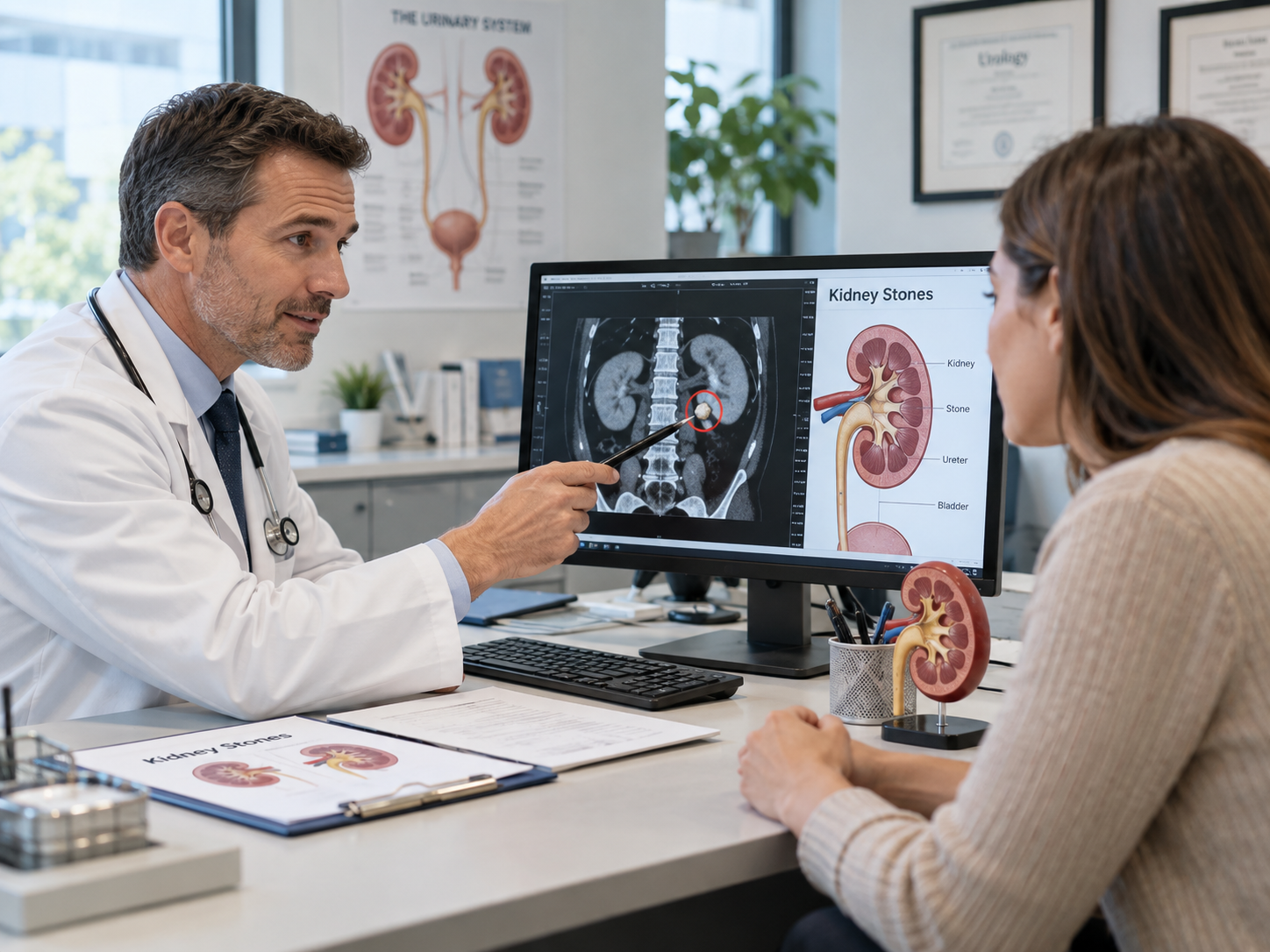
Kidney stones are one of the most common urological problems seen in clinical practice, and many people in Bangalore experience at least one episode of stone-related pain during their lifetime. Understanding what kidney stones are, why they form, and what treatment options exist can help patients make informed decisions and seek timely care. This article explains kidney stones in detail and outlines the options available for Kidney Stone Treatment in Jayanagar.
What Are Kidney Stones?
Kidney stones are hard, crystal-like deposits that form inside the kidneys when certain minerals and salts in urine become concentrated and stick together. They can be as small as a grain of sand or grow large enough to fill part of the kidney's internal structure. Stones may stay in the kidney without causing symptoms, or they may move into the ureter (the tube connecting the kidney to the bladder), often causing significant pain.
Common types of kidney stones include calcium oxalate stones (the most frequent type), uric acid stones, struvite stones (often linked to infection), and cystine stones (associated with a rare genetic condition). The type of stone can influence both the cause and the recommended treatment approach.
Common Symptoms of Kidney Stones
What are the symptoms of kidney stones? The most recognisable symptom is sudden, severe pain in the side or back, below the ribs, which may radiate toward the lower abdomen and groin. This pain, often called renal colic, can come in waves of varying intensity.
Other common symptoms include:
- Pain or burning sensation during urination
- Blood in the urine (pink, red, or brown)
- Nausea and vomiting
- Frequent urge to urinate
- Cloudy or foul-smelling urine
- Fever and chills, if infection is present
Not all kidney stones cause symptoms. Smaller stones sitting quietly in the kidney may be discovered incidentally during imaging done for unrelated reasons.
What Causes Kidney Stones?
What causes kidney stones? Kidney stones form when urine contains more crystal-forming substances—such as calcium, oxalate, and uric acid—than the fluid in the urine can dilute. Several factors increase this risk.
Dehydration
Low fluid intake is one of the most significant risk factors. When urine becomes concentrated, minerals are more likely to crystallise and form stones. This is particularly relevant in Bangalore's warmer months, when fluid loss through sweat can be higher.
Diet and Nutrition
Diets high in sodium, animal protein, and oxalate-rich foods (such as spinach, nuts, and certain grains) can raise stone risk. Low calcium intake, paradoxically, can also increase oxalate absorption and stone formation.
Family History
A personal or family history of kidney stones increases the likelihood of developing them, suggesting a genetic or metabolic predisposition in some individuals.
Medical Conditions
Conditions such as obesity, diabetes, gout, hyperparathyroidism, inflammatory bowel disease, and recurrent urinary tract infections are associated with a higher risk of stone formation.
Previous Kidney Stones
Patients who have had a kidney stone once are more likely to develop another, which makes long-term follow-up and preventive counselling important.
How Are Kidney Stones Diagnosed?
Diagnosis typically involves a combination of clinical evaluation and investigations:
- Urine tests to check for blood, crystals, and signs of infection
- Blood tests to assess kidney function and levels of calcium, uric acid, and other stone-forming substances
- Ultrasound as a first-line, radiation-free imaging option to detect stones and assess kidney swelling
- CT scan (non-contrast), which offers detailed information about stone size, number, and exact location when needed
These tests help determine the most appropriate treatment pathway.
Kidney Stone Treatment Options
Treatment depends on several factors, including stone size, location, number, associated symptoms, presence of obstruction, and the patient's overall health.
Observation and Natural Passage
Can kidney stones pass naturally? Small stones, typically under 5–6 mm, often pass on their own with adequate hydration and pain management. Regular monitoring with imaging ensures the stone is progressing without causing complications.
Medication
Pain relief medication and certain drugs that help relax the ureter (medical expulsive therapy) may be prescribed to assist natural stone passage in suitable cases.
Shock Wave Lithotripsy (SWL)
This non-invasive procedure uses focused shock waves from outside the body to break stones into smaller fragments that can pass in the urine. It is generally considered for certain stone sizes and locations.
Ureteroscopy and Laser Treatment
Is laser treatment used for kidney stones? Yes. In ureteroscopy, a thin scope is passed through the natural urinary passage to reach the stone, which is then fragmented using laser energy. Laser kidney stone treatment Jayanagar patients may be offered this approach is commonly used for stones located in the ureter or kidney, as it allows precise fragmentation with minimal tissue damage.
RIRS (Retrograde Intrarenal Surgery)
What is RIRS? RIRS is a minimally invasive technique that uses a flexible scope passed through the urinary tract to reach stones located within the kidney itself. Laser energy is used to fragment the stone, which is then removed or allowed to pass naturally. RIRS is typically considered for moderate-sized kidney stones and avoids external incisions.
PCNL and Mini-PCNL
What is PCNL? Percutaneous Nephrolithotomy (PCNL) is a procedure used for larger kidney stones. A small tract is created through the skin directly into the kidney to remove the stone. Mini-PCNL uses smaller instruments than conventional PCNL, which may be associated with less tissue trauma in appropriately selected cases. The choice between PCNL and Mini-PCNL depends on stone burden, kidney anatomy, and clinical judgment.
When Is Kidney Stone Removal Necessary?
When does a kidney stone need removal? Kidney stone removal is generally considered when a stone is too large to pass naturally, causes persistent pain, blocks urine flow, leads to recurrent infections, affects kidney function, or is associated with worsening symptoms. Each case is evaluated individually, and the treatment plan is tailored to the specific clinical picture rather than a one-size-fits-all approach.
When Should You See a Urologist?
When should I see a urologist? You should seek prompt medical attention if you experience:
- Severe, unrelenting pain in the back or side
- Blood in the urine
- Fever with chills, especially alongside flank pain
- Persistent nausea or vomiting
- Difficulty or inability to urinate
- Symptoms that worsen despite home care
These signs may indicate an obstructed or infected kidney stone, which requires timely evaluation to prevent complications.
How Can Kidney Stones Be Prevented?
How can kidney stones be prevented? While not every stone can be prevented, certain lifestyle measures can reduce risk:
- Hydration: Drinking adequate water throughout the day helps dilute urine and reduce crystal formation.
- Dietary considerations: Moderating sodium and animal protein intake, maintaining adequate dietary calcium, and limiting oxalate-rich foods when advised.
- Follow-up care: Patients with a history of stones benefit from periodic check-ups and, in some cases, metabolic evaluation to identify specific risk factors.
Prevention strategies are most effective when personalised based on stone type and individual risk factors, which is why professional evaluation is valuable.
Kidney Stone Treatment in Jayanagar
Patients looking for kidney stone treatment in Jayanagar have access to a full range of diagnostic and treatment options, from conservative management and medication to advanced procedures such as RIRS, PCNL, and Mini-PCNL. Dr. Uday Bhaskar, Urologist and Andrologist, provides evaluation and treatment for kidney stones based on individual patient assessment. For patients considering kidney stone removal in Jayanagar, treatment decisions are guided by stone characteristics, symptoms, and overall kidney health rather than a fixed protocol. Those seeking a kidney stone specialist in Jayanagar Bangalore can consult for a detailed evaluation to understand which treatment approach may be appropriate for their specific condition.
Why Choose an Experienced Urologist for Kidney Stone Care?
Kidney stone management involves more than removing a stone—it requires understanding the underlying cause, selecting the right treatment technique, and planning long-term prevention. Dr. Uday Bhaskar brings clinical experience in diagnosing and managing kidney stones using modern approaches, including laser-based and minimally invasive techniques where appropriate. An experienced urologist can help distinguish between cases that need observation and those requiring active intervention, ensuring that treatment is matched to the patient's specific situation.
Conclusion
Kidney stones are common, but they are also manageable with timely diagnosis and appropriate treatment. From dietary prevention to advanced procedures like RIRS and PCNL, a range of options exists depending on stone size, location, and patient health. If you are experiencing symptoms suggestive of a kidney stone or are seeking Kidney Stone Treatment in Jayanagar, timely consultation with a qualified urologist can help guide the right course of action.
Medical Disclaimer: This article is intended for general educational purposes only and does not constitute individual medical advice, diagnosis, or treatment recommendations. Kidney stone symptoms and treatment needs vary from patient to patient. Please consult a qualified urologist for personal evaluation and management of your specific condition.