
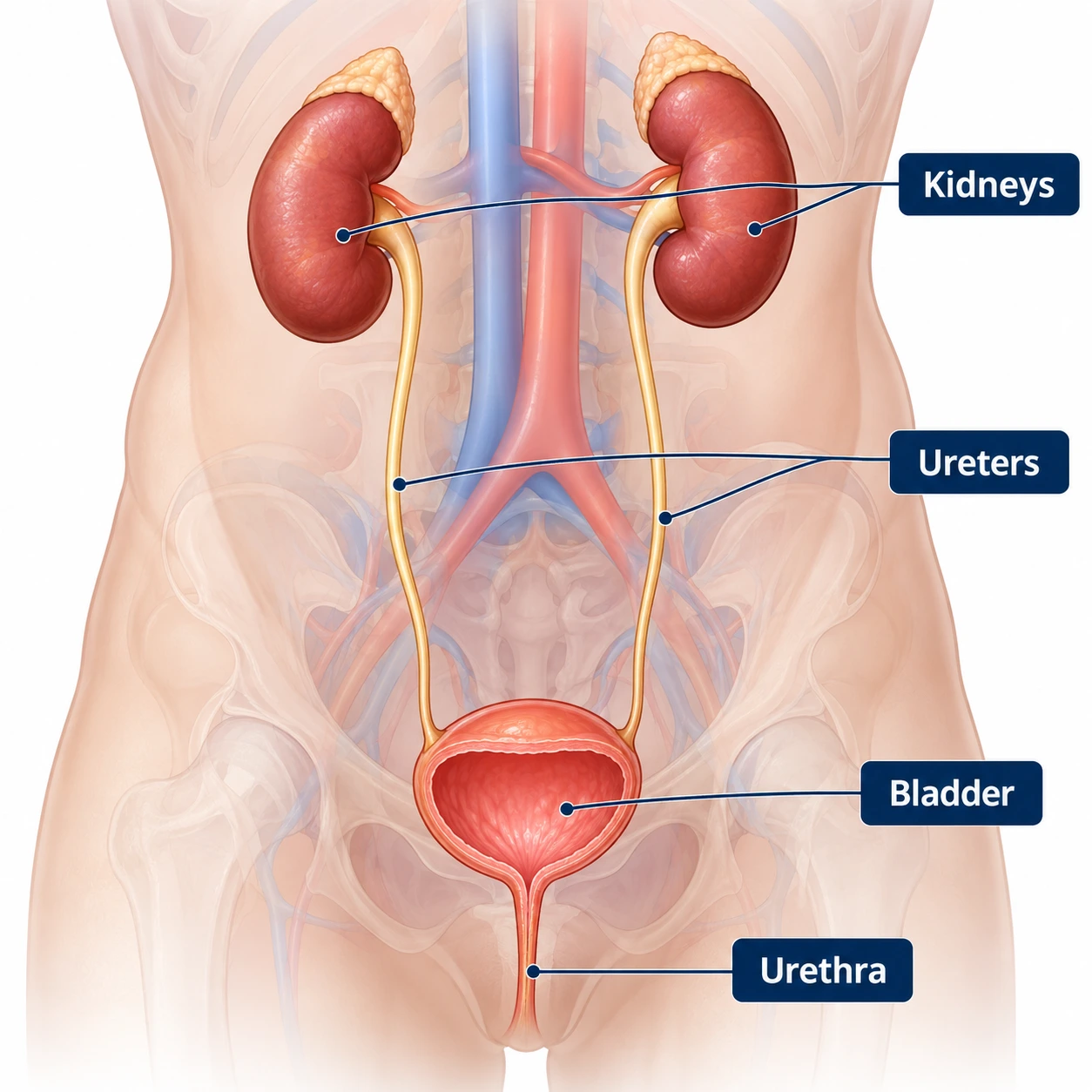
Do you often feel you must reach a toilet immediately, or get up several times at night to pass urine? Many people live with these problems for months before asking for help, assuming they are just part of ageing. Overactive bladder (OAB) is a common condition that can affect sleep, work, travel and confidence. Understanding overactive bladder symptoms is the first step towards finding the cause and choosing suitable care.
This article explains what OAB is, what may cause it, how it is assessed and which treatments are available. It is meant for patients and families in Bengaluru and elsewhere.
What Is Overactive Bladder?
Overactive bladder is a group of urinary symptoms, not a single disease. It is defined by urinary urgency, which means a sudden, strong need to pass urine that is difficult to delay. It is usually accompanied by frequent urination during the day, waking at night to urinate, or both. Some people also leak urine.
A few terms are worth knowing:
- Urgency: a sudden, compelling need to pass urine.
- Frequency: passing urine more often than usual during the day.
- Nocturia: waking one or more times at night to pass urine.
- Urgency incontinence: leaking urine before reaching the toilet, after a sudden urge.
OAB is not the same as urinary incontinence. Many people with OAB never leak urine, and leakage can also happen for other reasons.
What Are the Common Overactive Bladder Symptoms?
The main overactive bladder symptoms are:
- A sudden urge to urinate that is hard to postpone
- Passing urine frequently during the day
- Waking at night to pass urine (nocturia)
- Urgency incontinence, with leakage before reaching the toilet
- Difficulty holding urine once the urge starts
- Planning outings, travel or work around toilet access
Symptoms vary from person to person. Frequent urination alone does not confirm OAB, because many other conditions can cause it. A proper assessment is needed to understand what is actually happening.
What Causes Overactive Bladder?
In many people no single cause is found. Several factors can contribute.
Bladder Muscle and Nerve Signalling
The bladder wall has a muscle that normally relaxes while the bladder fills and contracts when you pass urine. In OAB, the signals between the bladder and the brain may be altered, or the muscle may contract involuntarily before the bladder is full. This is not true in every patient, so it should not be assumed.
Dietary and Lifestyle Factors
Caffeine (tea, coffee, some soft drinks) and alcohol can trigger or worsen symptoms in some people. Drinking very large amounts of fluid can increase urine production and frequency. Constipation can also put pressure on the bladder and aggravate urgency.
Medical Conditions and Neurological Factors
Neurological conditions such as stroke, Parkinson’s disease, multiple sclerosis or spinal cord problems can affect bladder control. Diabetes can increase urine production. In men, prostate-related changes may cause urinary symptoms that overlap with OAB.
Medicines and Other Contributing Factors
Some medicines, including certain diuretics (“water tablets”), can increase urine output or affect the bladder. Age-related changes, earlier pelvic or urinary tract conditions and urinary infections can also play a role. Do not stop any prescribed medicine on your own. Discuss it with your doctor.
How Is Overactive Bladder Diagnosed?
Diagnosis usually begins with a conversation and a physical review rather than complex tests. A urologist generally looks at:
- Symptom and medical history: how often urgency, frequency, leakage and night-time urination occur, and how much they affect daily life
- Medicine review: including diuretics and other regular tablets
- Physical examination: when clinically indicated
- Urine tests: urinalysis and, where infection is suspected, a urine culture
- Bladder diary: a simple record, usually kept for a few days, of fluids taken, times of urination, urgency and leakage
- Additional tests when needed: such as checking how much urine remains in the bladder after urination
Urodynamic studies, cystoscopy and imaging are not required for everyone with typical symptoms. They are considered when the history, examination or initial tests suggest they are needed.
What Are the Treatment Options for Overactive Bladder?
OAB treatment depends on symptom severity, underlying causes, medical history, personal preference and response to earlier treatment. Most people start with simple measures. Not every patient needs medicines or a procedure.
Lifestyle Changes and Fluid Management
Reducing caffeine and alcohol may help if they act as triggers. The aim is sensible fluid intake, not drinking too little. Too much fluid worsens frequency, while too little can cause concentrated urine, irritate the bladder and contribute to constipation. Treating constipation and keeping a bladder diary can also help.
Bladder Training
Bladder training is a behavioural method. You pass urine at planned times and slowly lengthen the gap between visits to the toilet. When urgency strikes, you pause, relax and use techniques to delay, rather than rushing. Progress takes time and varies between people, so no fixed timeline can be promised.
Pelvic Floor Muscle Training
The pelvic floor muscles support the bladder and help control urine. Pelvic floor exercises can help some people suppress urgency. Technique matters, so guidance from a doctor or pelvic floor physiotherapist is useful.
Medicines for OAB
If behavioural measures are not enough, a doctor may consider prescription medicines. Two main groups are used: antimuscarinic medicines and beta-3 adrenergic agonists. Choice depends on your health, other medicines and possible side effects. Antimuscarinics may cause dry mouth and constipation, and some may raise concerns about memory or thinking in older adults. Some beta-3 agonists can affect blood pressure. Medicines should be started, changed or stopped only on medical advice.
Other Treatment Options for Persistent Symptoms
When symptoms remain troublesome, a urologist may discuss:
- Botulinum toxin injections into the bladder muscle, which carry risks such as difficulty emptying the bladder and urinary infection
- Sacral neuromodulation
- Tibial nerve stimulation, where available and appropriate
These options have different benefits and limitations and are not suitable for everyone. They need individual assessment. Surgery is not routinely required for OAB.
Can Overactive Bladder Be Managed Without Medication?
Yes, often to a meaningful extent. Trigger identification, fluid adjustment, constipation care, bladder training and pelvic floor exercises are usually tried first. Their limits are that they need patience and regular practice, and they may not be enough for everyone. If symptoms continue, medicines or other options can be discussed.
When Should You See a Urologist?
Consider an assessment if urinary urgency, frequency or night-time urination is persistent, worsening or affecting sleep, work or social life. Seek prompt medical attention if you notice:
- Blood in the urine, even if painless
- Pain or burning while passing urine
- Fever or chills with urinary symptoms
- Significant lower abdominal, flank or back pain
- Difficulty passing urine
Inability to pass urine, especially with severe pain, or new leg weakness or numbness around the groin along with bladder symptoms, may need emergency care. Do not wait for a routine appointment.
Can Urinary Urgency Be a Sign of Another Condition?
Yes. Urgency and frequency can also occur with urinary tract infection, bladder stones, diabetes, prostate-related conditions, neurological disorders and bladder pain syndrome. In some cases, bladder tumours or other significant urinary tract disease can be responsible. These are not interchangeable with OAB and may need different tests and treatment.
Urgency or frequency by itself does not mean a tumour. Visible blood in the urine, however, should always be assessed promptly, because it can have several causes and some need investigation. If a bladder tumour is diagnosed, its care is a separate subject from OAB treatment. Bladder Tumor Treatment in Jayanagar and elsewhere is discussed only after proper clinical assessment and diagnosis.
How Can Overactive Bladder Symptoms Be Managed Long Term?
OAB cannot always be prevented, but day-to-day measures can help:
- Identify and limit your personal bladder irritants
- Maintain appropriate hydration
- Manage constipation
- Use a bladder diary to track patterns
- Follow an individualised bladder-training plan
- Seek review if symptoms change or persist
- Review your medicines with your doctor
- Attend follow-up visits to check response and side effects
No single food, exercise or supplement prevents or cures OAB.
Overactive Bladder Assessment in Jayanagar
A urological assessment helps separate OAB from other causes of urinary symptoms. Dr. Uday Bhaskar is a urologist and andrologist whose practice, per the website, covers urinary conditions. [Editorial note: confirm the current practice address in Jayanagar, the services offered and consultation details on besturologistinbangalore.com before publishing.] People searching for an OAB assessment in Jayanagar, Bangalore can check these details on the website.
If your concern is a known or suspected bladder tumour, that is a different subject from OAB. For information on Bladder Tumor Treatment in Jayanagar, refer to the website’s dedicated page, if available.
The Role of a Urologist in Managing OAB
A urologist assesses your symptoms, looks for other causes, explains treatment options with their benefits and risks, and monitors your response over time. Treatment is adjusted to each person, and a second opinion is always reasonable.
Conclusion
Overactive bladder causes urgency, frequency, night-time urination and sometimes leakage. Understanding overactive bladder symptoms helps you decide when to seek help. Many people improve with lifestyle changes, bladder training and pelvic floor exercises, while others may need medicines or advanced options. If your urinary symptoms are persistent, troublesome or concerning, consider a urological assessment.
Medical Disclaimer
The information provided in this article is for general educational purposes only and should not be considered a substitute for personalised medical advice, diagnosis or treatment. Blood in urine can have several causes, and appropriate testing and treatment should be determined by a qualified healthcare professional based on individual circumstances.