
Many patients today hear the term "robotic surgery" from their doctor and immediately picture something futuristic or automated. In urology, robotic-assisted techniques have become an established option for treating selected conditions of the prostate, kidneys and urinary tract. This article explains, in plain language, what robotic urology surgery actually involves, which conditions it may be used for, and the questions patients should ask before deciding on any surgical approach.
Dr. Uday Bhaskar , Urologist & Andrologist, sees patients in Jayanagar, Bangalore/Bengaluru, who often have questions about minimally invasive options for urological conditions. This article is intended purely for patient education and does not suggest that any specific procedure described here is performed by Dr. Uday Bhaskar; patients should confirm this directly during consultation.
What Is Robotic Urology Surgery?
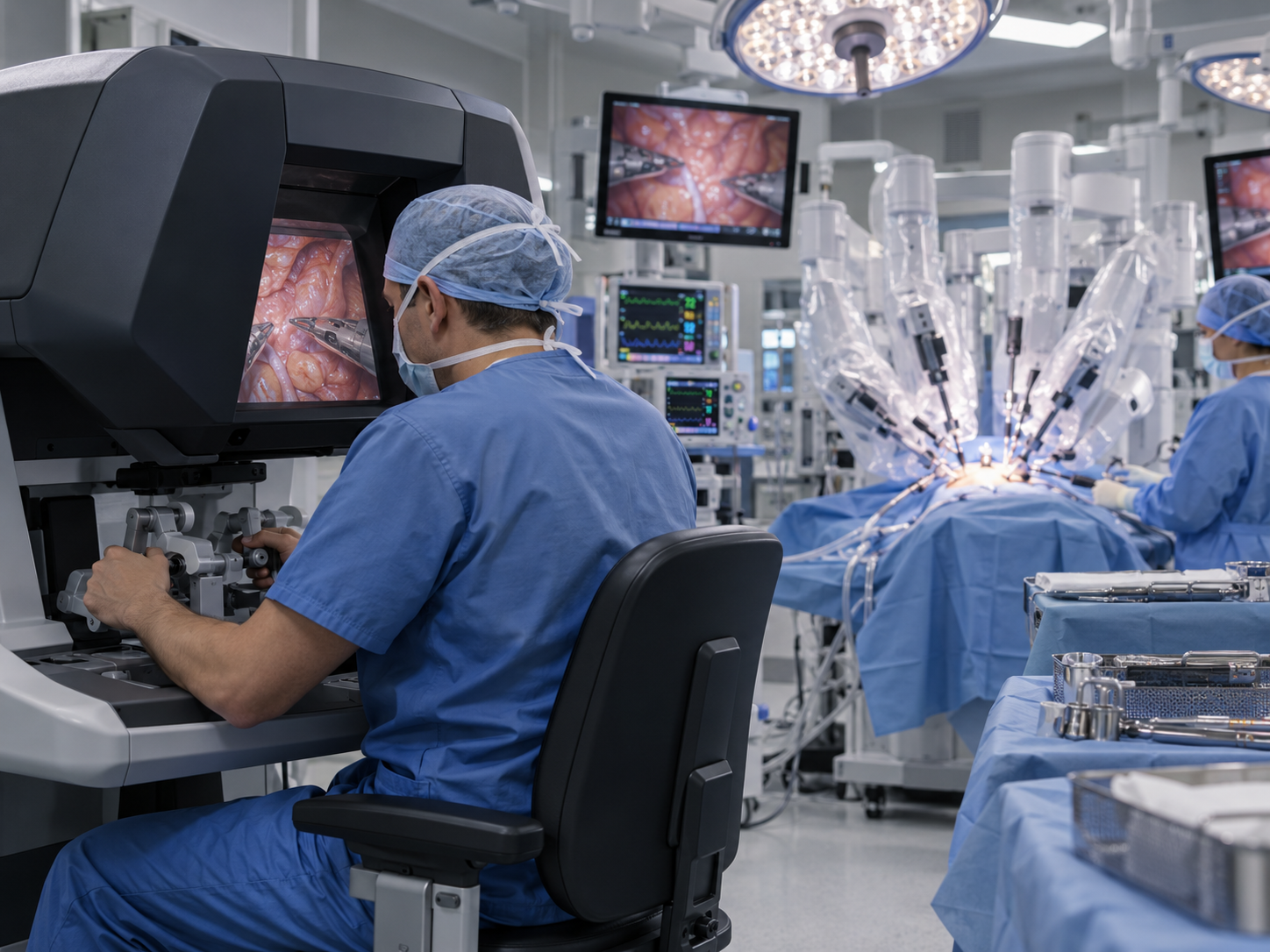
Robotic urology surgery is a form of minimally invasive surgery in which the operating surgeon controls a robotic surgical system from a console within the operating room. The system translates the surgeon's hand movements into precise, scaled-down movements of small instruments inserted through tiny incisions. A high-definition camera provides magnified, three-dimensional visualisation of the surgical area.
It is important to understand that the robotic system does not operate independently. Every movement of the instruments is directed by the surgeon in real time. The technology assists the surgeon's dexterity and vision; it does not make clinical decisions, and it is not remote or autonomous surgery.
How Does Robotic-Assisted Urology Surgery Work?
A typical robotic urology procedure generally follows these broad steps:
- Pre-operative evaluation of the patient's diagnosis, imaging and fitness for surgery
- Administration of appropriate anaesthesia
- A few small incisions are made in the abdomen
- Robotic instruments and a camera are positioned through these incisions by the surgical team
- The surgeon operates the robotic system from a console, controlling every instrument movement
- The diseased tissue, tumour or affected structure is treated or removed
- Instruments are withdrawn and incisions are closed
- The patient is monitored during recovery, followed by scheduled follow-up visits
Which Urological Conditions Can Be Treated With Robotic Surgery?
Robotic-assisted techniques may be considered for a range of urological conditions, depending on individual patient factors. Examples include selected prostate conditions, including prostate cancer requiring prostatectomy; certain kidney tumours; ureteropelvic junction obstruction; and selected reconstructive urinary tract procedures. Suitability always depends on diagnosis, disease stage, anatomy and overall health, and varies from patient to patient.
Robotic Prostate Surgery
Robotic prostate surgery , more specifically robotic-assisted radical prostatectomy, may be considered for men diagnosed with localised prostate cancer where surgical removal of the prostate gland is the recommended treatment. The procedure involves removing the prostate gland through small incisions using robotic instrumentation.
Whether this approach is appropriate depends heavily on the stage of the cancer, the size and location of the prostate, and the patient's general health. Potential benefits reported in medical literature include smaller incisions and magnified visualisation during dissection, though outcomes such as urinary continence and sexual function vary between individuals. According to the American Urological Association and European Association of Urology, functional outcomes after prostatectomy depend on multiple factors including nerve-sparing feasibility and baseline function. These aspects should be discussed in detail with the treating urologist rather than assumed from general information.
Robotic Kidney Surgery
Robotic kidney surgery is used in selected cases involving kidney tumours or other renal conditions requiring surgical treatment. Two common procedures are:
- Partial nephrectomy — removal of only the tumour-affected portion of the kidney, aiming to preserve healthy kidney tissue where clinically appropriate
- Radical nephrectomy — removal of the entire affected kidney, generally considered when a tumour is large, centrally located, or when partial removal is not feasible
The decision between these approaches depends on tumour size, location, number of tumours, kidney function and the patient's overall condition. Patients researching robotic kidney surgery Jayanagar should understand that not every kidney tumour is suitable for a robotic or kidney-sparing approach; this is determined after detailed imaging and specialist assessment.
Robotic Pyeloplasty and Urinary Reconstruction
In selected patients with ureteropelvic junction (UPJ) obstruction — a blockage where the kidney joins the ureter — robotic pyeloplasty may be considered to reconstruct and widen the affected segment. Similarly, certain other reconstructive procedures of the urinary tract may be performed using robotic assistance in appropriately selected patients. These are specialised decisions made after thorough evaluation, not a default treatment for every case of obstruction.
What Is Minimally Invasive Urology?
Minimally invasive urology refers to surgical techniques that avoid large open incisions, using instead small incisions or natural body openings to access and treat the urinary tract. This includes laparoscopic surgery, robotic-assisted surgery, and certain endoscopic procedures.
- Open surgery uses a single larger incision and direct hand access
- Laparoscopic surgery uses small incisions with long, rigid instruments controlled directly by the surgeon's hands
- Robotic-assisted surgery also uses small incisions, but the surgeon controls wristed, more flexible instruments through a console, with enhanced 3D visualisation
The right approach depends on the specific condition, the procedure required, patient anatomy, surgeon expertise and the technology available at the treating centre — not on assuming one approach is always preferable.
What Are the Potential Benefits of Robotic Urology Surgery?
In appropriately selected procedures and patients, robotic-assisted surgery may offer certain advantages, such as smaller incisions, enhanced magnified visualisation, and precise, tremor-filtered instrument movement through articulated instruments. Some procedures may also involve reduced blood loss compared to open surgery. These are potential, procedure-specific benefits rather than guaranteed outcomes, and they do not apply uniformly to every patient or every condition.
What Are the Risks and Limitations?
Robotic surgery does not eliminate the general risks associated with surgery. Possible risks include bleeding, infection, injury to surrounding organs or structures, anaesthesia-related complications, and blood clots. In some cases, additional treatment may be required, or the surgical team may need to convert to a laparoscopic or open approach if circumstances during surgery require it. Procedure-specific risks — such as effects on urinary continence and sexual function after prostate surgery, or changes in kidney function after renal surgery — should be discussed individually with the treating urologist.
Who May Be a Candidate for Robotic Surgery?
Candidacy for robotic urology surgery depends on several factors, including the diagnosis, disease stage, tumour size and location, patient anatomy, history of previous surgery, general health and fitness for anaesthesia, kidney function, patient preference, and the surgeon's clinical assessment. Availability of appropriate robotic technology at the treating hospital is also a practical consideration. Robotic surgery is not automatically suitable for every patient or every urological condition.
What Happens Before Robotic Urology Surgery?
Pre-operative evaluation typically includes a detailed medical history and physical examination, blood and urine tests, relevant imaging studies, and disease-specific investigations depending on the condition being treated. An anaesthesia evaluation and medication review are also standard. The treating urologist will discuss the risks, benefits and alternatives of the proposed procedure as part of informed consent before any surgical decision is finalised.
What Is Recovery Like After Robotic Surgery?
Recovery varies significantly depending on the specific procedure performed and individual patient factors. It generally involves a hospital stay of variable duration, structured pain management, early mobilisation where appropriate, wound care, and a gradual, monitored return to normal activities. Follow-up appointments allow the surgical team to track healing and address any concerns. Because recovery timelines differ by procedure and patient, it is best discussed directly with the treating urologist rather than assumed from general guidance.
When Should You Consult a Robotic Urologist?
Patients diagnosed with a urological condition — particularly one potentially requiring surgical treatment, such as a kidney tumour, prostate cancer, or UPJ obstruction — may benefit from consulting a Robotic Urologist in Jayanagar for evaluation. This does not mean every urological problem requires robotic surgery; many conditions are managed effectively with medication, monitoring, or other surgical approaches. A proper diagnostic work-up helps determine the most suitable path.
Robotic Urology Surgery in Jayanagar
Patients living in Jayanagar, Bangalore/Bengaluru, who are exploring robotic urology surgery in Jayanagar as a potential treatment option are encouraged to seek evaluation from a qualified urologist familiar with both robotic and conventional surgical techniques. A thorough assessment — including relevant imaging and diagnostic tests — helps clarify whether a particular condition could potentially be managed using minimally invasive or robotic-assisted methods, or whether another approach would be more appropriate. This article does not claim availability of specific robotic equipment or hospital affiliations and is intended for general educational awareness only.
What Should You Ask Your Urologist Before Robotic Surgery?
Before proceeding with any surgical plan, patients may find it helpful to ask:
- What exact condition is being treated, and at what stage?
- Is robotic surgery an appropriate option for my specific case?
- What alternative treatments or surgical approaches exist?
- Why is a robotic approach being recommended over other options?
- What are the potential risks specific to my procedure?
- What type of anaesthesia will be used?
- What should I expect during recovery, and for how long?
- What follow-up care and monitoring will I need?
- What happens if the surgical team needs to change approach during the operation?
Why Choose an Experienced Urologist for Robotic Surgery?
Successful outcomes in robotic urology depend heavily on accurate diagnosis, careful patient selection, procedure-specific surgical expertise, and clear communication about alternative approaches. An experienced robotic surgeon in Bangalore should be able to explain, in understandable terms, why a particular approach is being recommended, what the realistic expectations are, and how pre- and post-operative care will be managed. Choosing a surgeon involves evaluating training, experience and communication — not marketing claims.
Conclusion
Robotic urology surgery is a surgeon-controlled, minimally invasive approach that may be useful for selected prostate, kidney and reconstructive urological procedures. It is not automatically superior to open or laparoscopic surgery, and it is not appropriate for every patient or every condition. The right treatment choice depends on diagnosis, disease stage, anatomy, overall health and the surgeon's clinical assessment. Patients considering robotic surgery are encouraged to discuss their specific condition, along with all available treatment alternatives, with a qualified urologist.
Medical Disclaimer
The information provided in this article is for general educational purposes only and should not be considered a substitute for personalised medical advice, diagnosis or treatment. The suitability of robotic or other surgical approaches depends on individual clinical factors and should be discussed with a qualified urologist.