
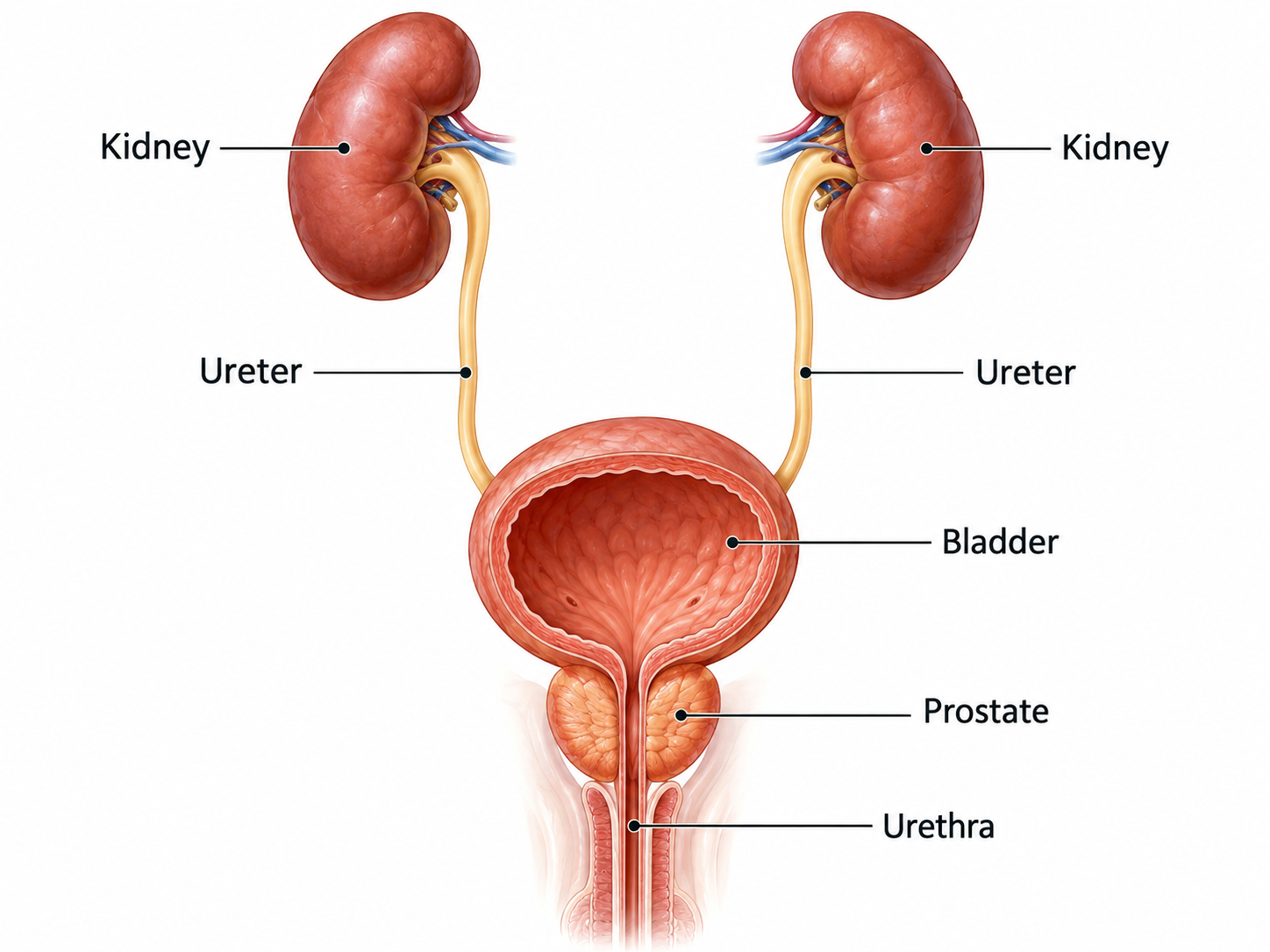
A urinary tract infection (UTI) is one of the most common infections seen in general and urological practice, affecting both men and women. Symptoms can range from mild burning and frequent urination to fever and flank pain when the kidneys are involved. Because presentations vary and some infections can become complicated, persistent, recurrent, or severe symptoms deserve proper medical evaluation rather than repeated self-treatment. This article explains what a UTI is, how it presents in men and women, its causes, diagnosis, treatment and prevention, and when it may be appropriate to consult a Urologist for UTI in JP Nagar , Bangalore/Bengaluru, such as Dr. Uday Bhaskar .
What Is a Urinary Tract Infection?
A urinary tract infection occurs when bacteria enter and multiply within the urinary system, which includes the kidneys, ureters, bladder and urethra. A lower urinary tract infection, commonly called cystitis, affects the bladder and is the most frequent type. Urethritis, inflammation of the urethra, can also occur. An upper urinary tract infection, or kidney infection (pyelonephritis), is generally more serious, as it involves the kidney itself and can make a person considerably more unwell. It is worth noting that not every urinary symptom is caused by a UTI — other conditions, including prostate problems, bladder irritation, or kidney stones, can produce similar symptoms, which is one reason proper urinary infection treatment begins with an accurate diagnosis rather than assumptions based on symptoms alone.
What Are the Symptoms of UTI in Women?
Common symptoms of a UTI in women include a burning or painful sensation while urinating, increased urinary frequency, a sudden urgent need to urinate, passing small amounts of urine frequently, discomfort in the lower abdomen or pelvis, cloudy urine, and sometimes a strong urine odour or visible blood in the urine. Symptoms can vary in intensity from person to person, and mild cases may present with only one or two of these features.
What Are the Symptoms of UTI in Men?
Men can also develop urinary tract infections, and the symptoms often overlap with those seen in women. These may include burning during urination, increased frequency, urgency, difficulty passing urine, lower abdominal or pelvic discomfort, blood in the urine, and, in more significant infections, fever or chills. Because urinary symptoms in men can sometimes be associated with prostate conditions, urinary obstruction, stones, or other urological problems, a UTI in a man often benefits from a more thorough evaluation than a straightforward infection in an otherwise healthy woman.
What Causes Urinary Tract Infections?
Most UTIs occur when bacteria, often originating from the digestive tract, enter the urinary tract and multiply. Not every UTI has an identical bacterial cause, and risk factors vary between individuals.
Risk factors in women include female urinary anatomy, which allows bacteria a shorter path to the bladder; sexual activity; a history of previous UTI; hormonal changes around menopause that can affect the urinary tract lining; pregnancy; and, in some cases, certain contraceptive methods.
Risk factors in men include prostate enlargement, incomplete bladder emptying, urinary obstruction, prior urinary procedures or catheter use, kidney or urinary stones, and other structural abnormalities of the urinary tract.
Other shared risk factors include diabetes, reduced immune function, structural urinary tract abnormalities, catheter use, a history of previous UTI, kidney stones, and urinary retention.
What Is Recurrent UTI?
Recurrent UTI generally refers to repeated infections occurring over a defined period, and it requires medical assessment rather than repeated self-treatment. Doctors typically use clinical criteria involving the number of infections within a set timeframe to characterise a case as genuinely recurrent. Possible contributors to recurrent UTI include a history of previous infections, sexual activity, menopause-related changes, incomplete bladder emptying, urinary stones, prostate problems in men, diabetes, and structural or functional abnormalities of the urinary tract. Because recurrent infections may signal an underlying issue that needs to be identified and addressed, they generally warrant further evaluation rather than another course of antibiotics without investigation.
How Is a UTI Diagnosed?
Diagnosis is based on a combination of symptoms, clinical assessment, and testing where appropriate.
- Medical history: Doctors typically ask about symptoms, duration, prior UTIs, pregnancy status where relevant, previous antibiotic use, other medical conditions, current medications, and any past urinary tract procedures.
- Urinalysis: A basic urine test can help identify signs of infection, such as white blood cells, nitrites, or blood.
- Urine culture: This test identifies the specific bacteria causing an infection and can help guide antibiotic selection, though not every simple, uncomplicated UTI requires a culture before treatment begins.
- Blood tests: These may be needed in selected patients, particularly when a systemic infection or kidney involvement is suspected.
- Imaging: Ultrasound, CT, or other imaging may be recommended in selected cases — for example, with recurrent infections, known kidney stones, suspected urinary obstruction, suspected structural abnormalities, complicated infection, or unexplained persistent symptoms. Imaging is not required for every UTI.
How Is a UTI Treated?
Treatment depends on the location and severity of the infection, the patient's sex and age, pregnancy status where relevant, medical history, prior infections, antibiotic resistance considerations, kidney function, and whether obstruction or stones are present.
Bacterial UTIs are commonly treated with antibiotics prescribed by a healthcare professional after appropriate evaluation. It is important to take prescribed antibiotics exactly as directed and to avoid sharing leftover antibiotics, since inappropriate or incomplete antibiotic use can contribute to resistance and incomplete treatment. Adequate hydration can support normal urinary function, but it is not a substitute for treating a confirmed bacterial infection. Appropriate pain-relief measures may also be considered depending on the individual's condition, though specific dosing should always be guided by a treating doctor. For recurrent or complicated infections, treatment may also need to address underlying contributing conditions, such as kidney stones, prostate enlargement, urinary obstruction, incomplete bladder emptying, or structural abnormalities. Patients researching UTI treatment in Bangalore should understand that a tailored approach, guided by proper diagnosis, generally produces a more reliable outcome than repeated self-medication.
When Does a UTI Require Urgent Medical Attention?
Certain symptoms suggest a more serious infection and warrant prompt evaluation: fever, chills, flank or back pain, vomiting, severe weakness or feeling significantly unwell, confusion (particularly in older adults), difficulty passing urine, severe pain, blood in the urine accompanied by significant symptoms, or urinary symptoms occurring during pregnancy. An infected and obstructed urinary system — for instance, an infection combined with a blocking kidney stone — can represent a serious medical situation that requires urgent treatment, since the infection cannot drain properly on its own.
UTI in Pregnancy
UTIs during pregnancy require prompt and appropriate medical assessment, since untreated infections can carry risks for both mother and baby. Pregnant women should not attempt to self-treat urinary symptoms. Healthcare professionals typically rely on urine testing and select antibiotics considered appropriate during pregnancy when treatment is indicated; specific medicine choices should always come from the treating doctor based on individual circumstances.
UTI in Older Adults
Older adults may present with different or less typical UTI symptoms, and confusion alone should not be assumed to indicate a UTI without proper clinical evaluation. Testing results in older adults need careful clinical interpretation, since bacteria can sometimes be present in the urine without symptoms (asymptomatic bacteriuria), and this does not always require antibiotic treatment.
How Can UTIs Be Prevented?
Prevention strategies include maintaining adequate fluid intake appropriate to individual health, avoiding unnecessary delays in urination, practising appropriate hygiene, urinating after sexual activity where appropriate, managing diabetes and other underlying health conditions, addressing incomplete bladder emptying, and seeking medical evaluation for recurrent infections rather than repeatedly self-treating. Avoiding unnecessary antibiotic use also matters for long-term effectiveness of treatment. Some patients ask about cranberry products; the evidence for their benefit varies, and they should not be relied upon as a replacement for proper medical evaluation and treatment. Prevention approaches may also differ for people experiencing recurrent UTI compared with those with an occasional, uncomplicated infection.
UTI in Women: When Should You See a Urologist?
Women with frequent, recurrent, or unusual urinary infections, or those whose symptoms do not settle with standard treatment, may benefit from urological evaluation to identify contributing factors. Some patients specifically search for a female urologist in JP Nagar , which reflects a personal preference some women have for their consultation, though effective UTI evaluation and treatment are not limited to doctors of a particular gender — the important factor is a thorough clinical assessment.
UTI in Men: Why Urological Evaluation May Be Important
A UTI in a man, particularly if it recurs, often warrants evaluation for underlying contributing factors such as prostate enlargement, prostatitis, urinary obstruction, urinary retention, stones, or catheter-related issues. Because these conditions are less common causes of infection in women, urologists often take a closer look at anatomy and urinary function when a man presents with a confirmed UTI.
When Should You See a Urologist for Recurrent or Complicated UTI?
Consultation with a urinary tract infection doctor in JP Nagar or a urinary tract specialist in JP Nagar is generally appropriate for recurrent infections, infections that do not respond to standard treatment, infections associated with fever or flank pain, UTIs occurring alongside known stones or urinary obstruction, or persistent unexplained urinary symptoms. A urologist can help determine whether further testing, such as culture, imaging, or functional assessment, is needed to identify an underlying cause.
Urologist for UTI in JP Nagar
Patients in JP Nagar and surrounding parts of Bengaluru dealing with recurrent UTI, complicated urinary infections, urinary obstruction, stones, prostate-related urinary problems, or persistent urinary symptoms may benefit from a structured urological evaluation. A Urologist for UTI in JP Nagar can help assess whether an infection is straightforward or whether it reflects an underlying condition needing separate attention, though outcomes naturally vary depending on individual clinical circumstances.
Why Consult a Urologist for Persistent or Recurrent UTI?
Persistent or recurrent urinary infections are best assessed by an urinary infection doctor Bangalore patients can consult for a structured, evidence-based evaluation rather than repeated courses of antibiotics without investigation. Dr. Uday Bhaskar, practising as a urologist and andrologist, evaluates patients with recurrent or complicated UTI individually, using history, relevant testing and, where indicated, imaging to guide diagnosis and management. This article does not claim that any individual doctor is objectively the "best" for UTI care, as appropriate treatment depends on each patient's specific findings.
Role of a Urologist in UTI Care
A urologist's role in UTI care includes evaluating recurrent infections, investigating complicated UTIs, assessing urinary obstruction, evaluating kidney and urinary stones, assessing prostate-related urinary problems, reviewing urine culture results, determining whether imaging is required, managing recurrent urinary infections, and identifying underlying urological causes that may need separate treatment.
Conclusion
Urinary tract infections can affect both men and women and commonly present with burning, frequency and urgency, while fever, chills and flank pain may indicate a more significant infection involving the kidneys. UTIs should not always be self-treated, particularly when infections recur or symptoms are severe. Recurrent or complicated infections often require further investigation to identify an underlying cause, and appropriate diagnosis is central to guiding effective treatment. Prevention involves addressing individual risk factors, and a urologist can help evaluate recurrent, complicated, or persistent urinary infections that do not resolve with standard care.
Medical Disclaimer: The information provided is for general educational purposes and is not a substitute for professional medical evaluation, diagnosis or treatment. Urinary symptoms can have several causes, and appropriate testing may be required to identify the underlying condition. Patients with persistent, recurrent or severe symptoms should consult a qualified healthcare professional or urologist.