
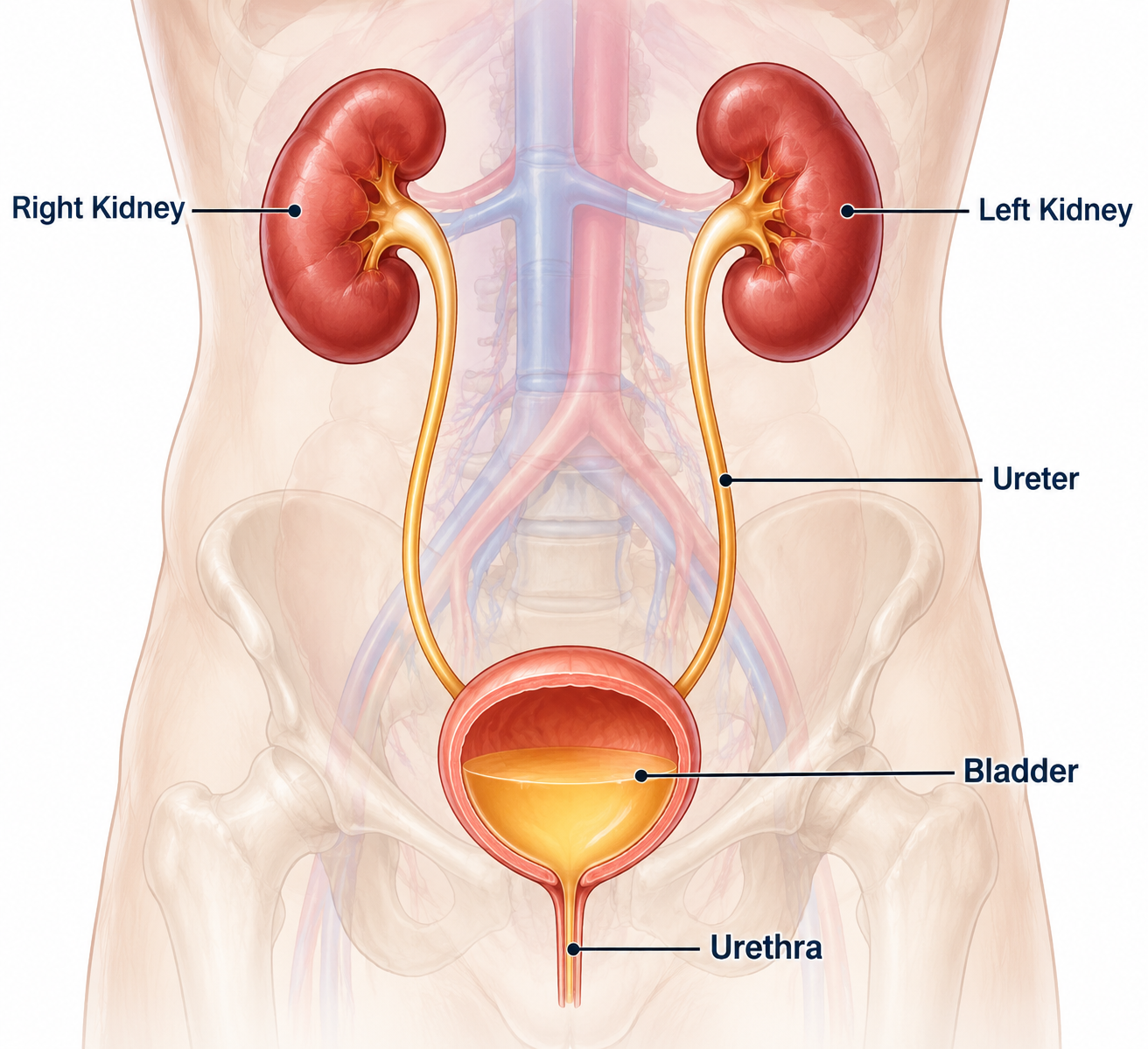
Blood in urine, medically known as hematuria, is a symptom that can range from a common, easily treatable cause like a urinary infection to a sign of a kidney, bladder, or urinary tract condition that needs closer evaluation. Because the possible causes vary so widely, unexplained blood in urine should never simply be assumed to be harmless — even when there is no pain.
Dr. Uday Bhaskar , Urologist & Andrologist, sees patients across Bangalore/Bengaluru, including those from Jayanagar, who notice unexplained urinary bleeding. This article explains what hematuria means, its common causes, and when evaluation is advisable. It does not claim that any specific test or treatment described here is provided by Dr. Uday Bhaskar , and patients should confirm this directly during consultation.
What Does Blood in Urine Mean?
Hematuria simply means the presence of blood in the urine. It falls into two categories: gross hematuria, where blood is visible to the naked eye and may turn urine pink, red, brown or tea-coloured, and microscopic hematuria, where blood is present in amounts too small to see and is detected only through urine testing.
Urine colour alone cannot determine the underlying cause — the same visible symptom can result from something as common as an infection or as significant as a kidney or bladder condition. This is precisely why evaluation matters, regardless of how much or how little blood is seen.
What Are the Common Causes of Blood in Urine?
Urinary Tract Infection
Infections of the bladder or urinary tract are among the most frequent causes of blood in urine, often accompanied by burning during urination, increased frequency, urgency, lower abdominal discomfort, and sometimes fever.
Kidney Stones
Kidney stones can irritate the lining of the urinary tract as they move, causing bleeding that may be accompanied by severe flank pain, particularly if a stone is obstructing urine flow.
Bladder Stones
Similarly, bladder stones may cause blood in urine along with symptoms such as urinary urgency, interrupted urine flow, or lower abdominal discomfort.
Kidney Problems
Certain kidney problems, including some forms of kidney inflammation or disease, can cause microscopic or, less commonly, visible hematuria. Because kidney-related bleeding often has no other obvious symptoms, it may only be detected through routine testing.
Prostate-Related Conditions
In men, prostate conditions — including an enlarged prostate — can sometimes be associated with urinary bleeding, along with other urinary symptoms such as a weak stream or frequent urination.
Injury or Medical Procedures
Urinary tract trauma, catheter placement, and other urological procedures can cause temporary blood in urine as part of the healing process.
Medications and Other Causes
Certain medications, including blood thinners, can increase the likelihood of urinary bleeding. It's also worth noting that apparent blood in urine can sometimes originate from another source, such as vaginal bleeding, which may need to be clarified during evaluation.
Can Blood in Urine Be a Sign of Bladder Cancer?
Blood in urine can, in some cases, be an early warning sign of bladder cancer, particularly when it is unexplained, recurrent, or occurs without pain. However, blood in urine does not mean a person has cancer — the vast majority of cases have other explanations, such as infection or stones.
Relevant bladder cancer symptoms to be aware of include visible blood in urine, frequent urination, urinary urgency, and other persistent urinary symptoms that don't resolve. Because early symptoms can sometimes be subtle or intermittent, medical evaluation is important rather than assuming symptoms will pass on their own.
What Is Microscopic Hematuria?
Microscopic hematuria refers to blood detected only through urine testing, with no visible change to urine colour. Because patients often have no symptoms at all, it is typically discovered incidentally during a routine urine test. Whether microscopic hematuria requires further investigation depends on factors such as the patient's age, medical history, risk factors, and whether the finding is persistent across repeat testing.
When Should Blood in Urine Be Considered a Warning Sign?
Certain factors may increase the importance of prompt evaluation, including visible blood, recurrent bleeding episodes, painless bleeding, blood clots in the urine, persistent urinary symptoms, a smoking history, older age, and a previous personal or family history of relevant urinary tract conditions. These factors do not confirm a serious diagnosis on their own — they simply indicate that evaluation should not be delayed.
How Is Blood in Urine Diagnosed?
Medical History and Physical Examination
Evaluation begins with a detailed discussion of symptoms, medications, previous urinary conditions, and relevant risk factors, followed by a physical examination.
Urine Tests
Urinalysis, urine microscopy, and urine culture help identify infection, confirm the presence of blood, and detect other abnormalities in the urine.
Blood Tests
Blood tests may assess kidney function and, when clinically relevant, blood counts or other markers depending on the suspected cause.
Ultrasound
Ultrasound imaging helps evaluate the kidneys and urinary tract for stones, structural abnormalities, or other findings.
CT Imaging
In selected cases, CT imaging may be recommended for a more detailed assessment, depending on the suspected condition and the patient's individual risk factors.
Cystoscopy
Cystoscopy allows the urologist to directly visualise the inside of the urethra and bladder using a thin camera, which can be important when the cause of bleeding is not clear from other tests.
What Is Hematuria Treatment?
Hematuria treatment depends on the underlying cause. Blood in urine itself is a symptom, not a diagnosis, so treatment focuses on identifying and managing the condition responsible for the bleeding.
Depending on findings, this may involve antibiotics for a confirmed bacterial infection, management of kidney or bladder stones, treatment of prostate-related conditions, ongoing management of kidney disease, treatment of bladder conditions, or referral for specialist cancer evaluation when clinically indicated. There is no single, universal hematuria treatment — the appropriate approach is determined only after the cause is identified.
Blood in Urine and Bladder Problems
Bladder problems can present with blood in urine alongside frequent urination, urgency, painful urination, or difficulty fully emptying the bladder. These symptoms can arise from several different bladder conditions, ranging from infection to structural or functional issues, and generally require proper evaluation rather than assumption.
Blood in Urine and Kidney Problems
Kidney problems may sometimes present with microscopic or visible hematuria, occasionally without any other noticeable symptoms. Additional tests, including blood work and imaging, often help determine whether bleeding is originating from the kidneys themselves or further down the urinary tract, since the source significantly affects the diagnostic and treatment approach.
When Should You See a Urologist?
Patients should consider urological evaluation for unexplained visible blood in urine, recurrent bleeding, blood clots, persistent urinary symptoms, recurrent urinary infections, suspected urinary stones, difficulty passing urine, known risk factors for urinary tract conditions, or abnormal findings on routine urine tests. Importantly, patients should not wait for pain to appear before seeking evaluation, since painless bleeding can still be clinically significant.
Many patients search for the Best Urologist in Bangalore when trying to find a qualified specialist for such symptoms. Rather than relying on rankings or marketing claims, it is worth considering a urologist's training, thoroughness of evaluation, clarity of communication, and willingness to explain findings and next steps clearly.
When Should You Search for a Urologist Doctor Near Me in Jayanagar?
Patients in or around Jayanagar who notice unexplained blood in urine may search for a urologist doctor near me Jayanagar to find a qualified specialist for evaluation. This is a reasonable step particularly when bleeding is recurrent, associated with other urinary symptoms, or simply unexplained. This article does not state a specific clinic address, hospital affiliation, or appointment availability, and patients should verify these details directly.
What Should You Expect During a Urology Consultation?
A typical consultation for blood in urine generally includes a discussion of symptoms, a detailed medical history, a review of current medications, a physical examination, urine testing, and additional investigations where appropriate based on initial findings. The treating urologist will discuss possible causes and outline a suitable plan for further testing or management. The exact pathway varies from patient to patient depending on individual findings and risk factors.
Why Timely Urological Evaluation Matters
Timely evaluation helps identify the specific cause of urinary bleeding, allowing the treating doctor to determine whether the situation calls for active treatment, monitoring, or further specialist referral. Prompt assessment is a practical step toward clarity — not a cause for alarm — and helps avoid unnecessary delay in addressing treatable conditions.
Conclusion
Blood in urine, or hematuria, can result from a wide range of causes — including urinary infections, kidney or bladder stones, prostate conditions, kidney disease, and, in some cases, urinary tract cancer. Diagnosis typically involves a combination of urine tests, blood tests, imaging, and sometimes cystoscopy, while treatment depends entirely on the specific cause identified. Because the possible causes vary so significantly, unexplained or persistent blood in urine should always be evaluated by a qualified urologist rather than dismissed.
Medical Disclaimer
The information provided in this article is for general educational purposes only and should not be considered a substitute for personalised medical advice, diagnosis or treatment. Blood in urine can have several causes, and appropriate testing and treatment should be determined by a qualified healthcare professional based on individual circumstances.